

November always seems to arrive in a rush. One week the hallways are full of pumpkins, and the next you’re thinking about poppies, quiet moments of remembrance and, before you know it, turkeys and gratitude. It’s a short month in the art room, too: after a busy October, there are usually only three or four full weeks to work with before the holiday season takes over.
That’s exactly why I love planning November ahead of time. If you’re a member of the Artastic Collective, the Year Planner inside the membership already has the month mapped out for you, one lesson a week for every grade from kindergarten to grade 9. And if you’re not a member, I hope this post still gives you a clear, calm way to think about November art. Let me walk you through how the month is organized, six lessons I’d love for you to try and a few tips that make each week feel easier.
This post contains affiliate links. As an Amazon Associate I earn from qualifying purchases.

November in Three Big Ideas
When I built the 36-week Year Planner for the Artastic Collective, I wanted every month to have a rhythm that made sense for kids and for busy grown-ups. Seasonal lessons land in their season, and the elements and principles of art, the artists and the clay projects are spread across the year so nothing piles up. November ends up with three clear ideas, one per week:
- Week 10: Remembrance and Veterans Day. A gentle, meaningful week with poppies, candles and ways to say thank you.
- Week 11: The element of art value. A week about lights and darks, which happens to be the perfect skill to build before winter landscapes and night skies.
- Week 12: Thanksgiving. Turkeys, harvest scenes and mixed media projects that feel cozy and celebratory.
Kindergarten has its own twist (week 10 is a line landscape, because our youngest artists are still building their basic vocabulary), but for most grades the pattern is the same. I like this order because it moves from a quiet, reflective week, into a skill-building week, and then into a joyful, celebratory one. Students get a little bit of everything without feeling like they’re switching gears every day.
The planner also tells you exactly which lesson to use for each grade. In grade 1, for example, the three November weeks are Poppies in a Field, a Value Shark Collage and a Thanksgiving Turkey. In grade 4 they’re an Honoring Veterans project, a Remembrance Day Poppy and a Wild Turkey in a Forest. In grade 6 they’re a Remembrance Day Poppy, the Monochromatic Snail Landscape and a Mixed Media Porcupine. Same big ideas, just right for each age.

Here’s a peek at the grade 3 plan for November and December. Every week links straight to its lesson inside the membership, and there’s a printable PDF for each grade with a picture, a short description and a clickable link for every lesson. You can swap weeks freely to fit your calendar, which matters a lot in November, when school schedules change around holidays, report cards and assemblies.
Six Art Lessons to Try in November
Here are six lessons from the November weeks of the planner, two for each big idea, across a range of grades. I’m sharing the finished art, the main materials and what kids learn, so you can picture where each one fits. The full lesson plans, step-by-step tutorials and printables live inside the Artastic Collective, along with hundreds of other art lessons.
Week 10: Poppies in a Field (Grades 1 to 4)
This is one of my favorite ways to introduce Remembrance Day to younger artists. Students draw a simple cross with bright poppies in a field, then bring it to life with oil pastel and paint. Because oil pastel resists paint, the poppies stay bold and red while the color washes around them. That little bit of magic is always a hit, and it gives you a natural way to talk about how artists choose materials on purpose.
What kids learn: resist painting, how to follow a directed drawing at their own pace and how a single symbol, like a poppy, can carry a lot of meaning. It also pairs beautifully with a social studies lesson, so if you teach multiple subjects, this is an easy week to connect.
Week 10: Lest We Forget (Grades 3 to 6)

For older students, Lest We Forget is quieter and more reflective. A glowing candle, a cross and poppies come together with the words “Lest We Forget.” Students use washable felt markers as paint, then add pencil crayon shading to give the candle form. It’s stress-free and mess-free, which I know matters a lot during a busy week.
What kids learn: how markers and water can create a soft glow, how shading turns a flat shape into a rounded form and how artists use symbols to share a message. Older students often take this one very seriously, and the finished pieces look lovely displayed together in a hallway.
Week 11: Value Chameleon Collage (Kindergarten to Grade 2)

Value can sound like a big word for little artists, but this chameleon makes it fun. Students explore light and dark with tempera paint, creating a range of values as they paint their chameleon, then build a collage world around it with scrap paper and magazine or newspaper clippings. It’s a members-only lesson, so you’ll only find it inside the Artastic Collective.
What kids learn: that adding white makes a color lighter and adding a darker color makes it deeper, how to follow a step-by-step drawing tutorial and how collage can add texture and interest to a background. Young students also love that chameleons change color, so it’s an easy hook to start the conversation.
Week 11: Monochromatic Snail Landscape (Grades 5 to 8)

This snail is one of the most striking pieces in the whole planner. Students choose a single color and use liquid tempera paint and pencil crayon to move from the lightest light to the darkest dark, so the spiral shell seems to glow against the background. Because the color stays the same, students can really see value at work. It comes with a full video tutorial, which makes it easy to teach even if value isn’t your strongest area.
What kids learn: monochromatic color schemes, tints and shades, and how contrast between light and dark creates a focal point. It’s a wonderful lesson to revisit later in the year, when students start painting snowy nights and winter skies.
Week 12: Wild Turkey in a Forest (Grades 3 to 5)

I love that this turkey looks like he’s hiding out in the woods. The background starts with painted and ripped paper for a glowing sunset, the pine trees are painted with felt markers, and the turkey himself is drawn and colored with pencil crayon. A sprinkle of salt or a dab with a paper towel adds texture along the way. There are lots of different processes in one project, which keeps students engaged right up to the holiday.
What kids learn: layering, creating texture with simple household materials, and how different mediums can work together in one artwork. It’s a great reminder that a Thanksgiving project doesn’t have to be a handprint turkey to feel festive.
Week 12: Turkey Paper Weaving (Grades 2 to 5)

This goofy, big-eyed turkey always makes people smile. Students weave a paper background in their choice of colors, then draw, color and glue their turkey in front of it. Paper weaving is such a valuable skill: it builds fine motor control, patience and an understanding of pattern, and it feels like a craft and an art lesson at the same time.
What kids learn: over-under weaving, pattern, and how mixed media can combine drawing, coloring and paper construction. Expect a few groans when a strip slips out, then a lot of pride when the weaving comes together.
Short on Time? How to Choose
Not every November gives you three full art periods. If your schedule is squeezed, here’s how I’d decide what to keep.
- Only one week? Choose the big idea that matters most to your school community. In Canada, many schools focus on Remembrance Day; in the United States, Thanksgiving week often fills up fast, so an early Veterans Day or value lesson may fit better.
- Two weeks? Pair the value lesson with whichever holiday you celebrate. The light-and-dark skills from value week show up again in poppy petals, candle glows and turkey feathers.
- A shortened class? Split one lesson across two sessions. Background and drawing on day one, color and details on day two. Most of these projects have natural stopping points.
- Mixed ages at home? Pick one theme for the whole family and let each child use the lesson for their age. Everyone talks about the same idea at dinner, and nobody has to wait for anyone else.
Whatever you choose, give yourself permission to keep it simple. One thoughtful project that students care about is worth more than three rushed ones.
Tips to Make November Art Feel Calm
November can be a lot. Here are a few simple ideas that make these three weeks run more smoothly, whatever lessons you choose.
- Open Remembrance week with a conversation, not a lecture. Ask students what they already know about poppies or Veterans Day, and let their answers guide a short discussion. Keep it gentle and age-appropriate, and let the art carry the feeling.
- Teach value with a squint. Ask students to squint at their artwork halfway through. Color fades, and the lights and darks pop out, so they can quickly see where they need more contrast.
- Make a value scale together first. A five-step scale from light to dark on a scrap strip takes five minutes, and it gives every student a reference to look back at while they paint.
- Prep Thanksgiving materials early. Cut weaving strips, tear paper or pre-sort colors during week 11 so the Thanksgiving week is all about making.
- Save a reflection moment. End each week with a quick gallery walk or one sentence about what students are proud of. It’s the step we skip most when time runs short, and it’s the one that helps learning stick.
If you’d like more ideas for that last step, I shared my favorite sentence starters in how to talk to kids about their art. And for a deeper look at value, my post on elements of art lessons for kids walks through one lesson for each of the seven elements.
Adapting November Art for Different Ages
One of the reasons I organized the planner by big ideas is that it makes it easy to teach several ages at once. If you’re a homeschool family or teach a split class, everyone can explore the same theme at their own level.
- Kindergarten to grade 2: Keep it hands-on. Poppies in a Field and the Value Chameleon Collage both use simple shapes, bright color and lots of tactile materials.
- Grades 3 to 5: Add more steps and more choice. Wild Turkey in a Forest and Turkey Paper Weaving let students make decisions about color and pattern while learning new techniques.
- Grades 6 to 8: Push toward intention. The Monochromatic Snail and Lest We Forget give older students room to think about mood, symbolism and contrast, and to write a short artist statement about their choices.
If you’re a classroom teacher or parent who doesn’t feel like an “art person,” you’re in good company. The lessons in the planner come with lesson plans and step-by-step support, so you can teach with confidence. I wrote more about that in how to teach art when you’re not an art teacher.
A Picture Book to Pair With Thanksgiving Week
A read-aloud is one of my favorite ways to open a holiday art lesson. It settles the room, sparks questions and gives students something to think about while they create. This one tells the true story of Sarah Hale, the writer who spent years asking presidents to make Thanksgiving a national holiday.
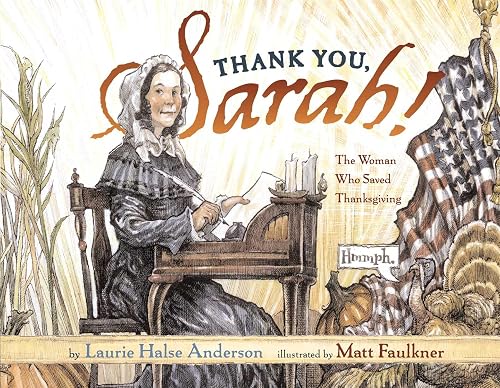
Thank You, Sarah: The Woman Who Saved Thanksgiving
by Laurie Halse Anderson, illustrated by Matt Faulkner
The story of Sarah Hale and how Thanksgiving became a national holiday.
Planning the Rest of Your Year
November is just one month, but the same approach works all year long: a few big ideas, one lesson a week, and room to swap things around when life happens. If you’d like the whole year mapped out, you’ll find the Year Planner, the November lessons and hundreds of other art lessons inside the Artastic Collective. On the Artastic Collective blog, I also wrote about how to plan your K to 9 art year with this art curriculum.
A few more posts that might help with your planning this season:
- How to plan a full year of art lessons without losing your weekends
- K to 8 art curriculum map: a year of art lessons, week by week
- 15 November art ideas for elementary students
- Last-minute Remembrance Day art projects and poppy lesson ideas
- Artist-inspired art lessons for kids
And if you’d like to try some lessons for free first, my Free Art Lesson Library is a lovely place to start.
Save This for Your November Planning
Pin it for later: save this to your Pinterest board so it’s there next time November sneaks up on you.

Enjoy Your November Art
November art doesn’t have to be a scramble. With three clear ideas, one meaningful, one skill-building and one joyful, the month can feel calm and purposeful for you and exciting for your students. Whether you teach these exact lessons or use the structure to plan your own, I hope it helps you walk into the month with a plan.
If you’d like every week planned for you, the Year Planner and all six of these lessons are waiting inside the Artastic Collective, along with hundreds of other art lessons for Pre-K to grade 9.
This post contains affiliate links. As an Amazon Associate I earn from qualifying purchases.
Not Looking for a Whole Curriculum? Grab These Art Lessons on Their Own
If you only need a lesson or two for Remembrance Day or Thanksgiving, these lessons are available individually in my shop. Each one is ready to teach. Tap a cover to see what’s included.


Share this:

Did this help? Leave a reaction
Let's talk about it. Have a question, a photo-worthy result, or a tip for other teachers? Drop it in the comments below.
💬 Leave a comment


