
Principles of Design Art Lessons
The Principles of Design describe how artists arrange the Elements of Art: balance, contrast, emphasis, movement, pattern, rhythm, unity and more. They give students the words to explain why an artwork works. Here are Ms Artastic workbooks and lessons, free posts and videos to teach them.
Featured Ms Artastic lessons
Ready-to-teach lessons from my shop. Each card shows the grade range listed for that lesson.
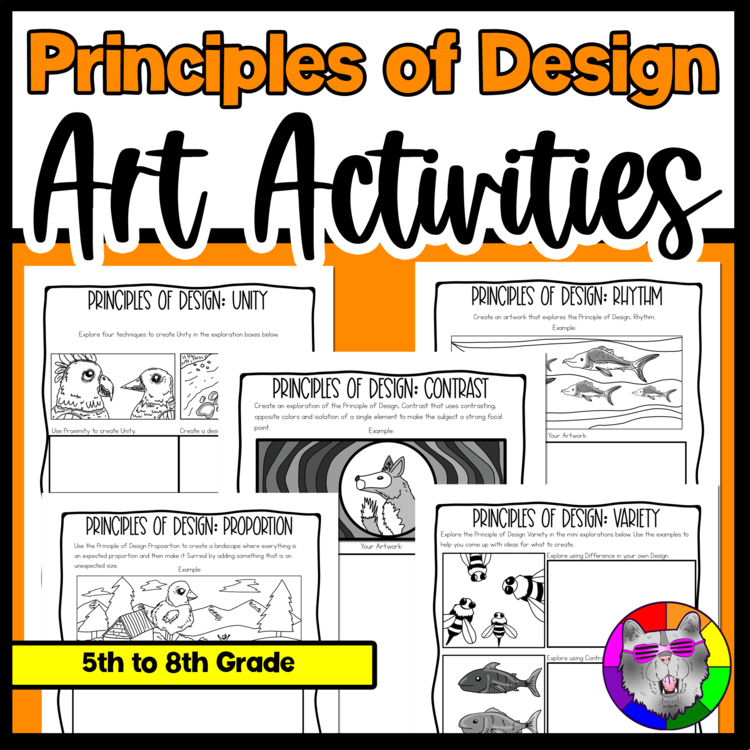 Principles of Design Workbook (Upper Grades)Grades 5 to 8See the lesson
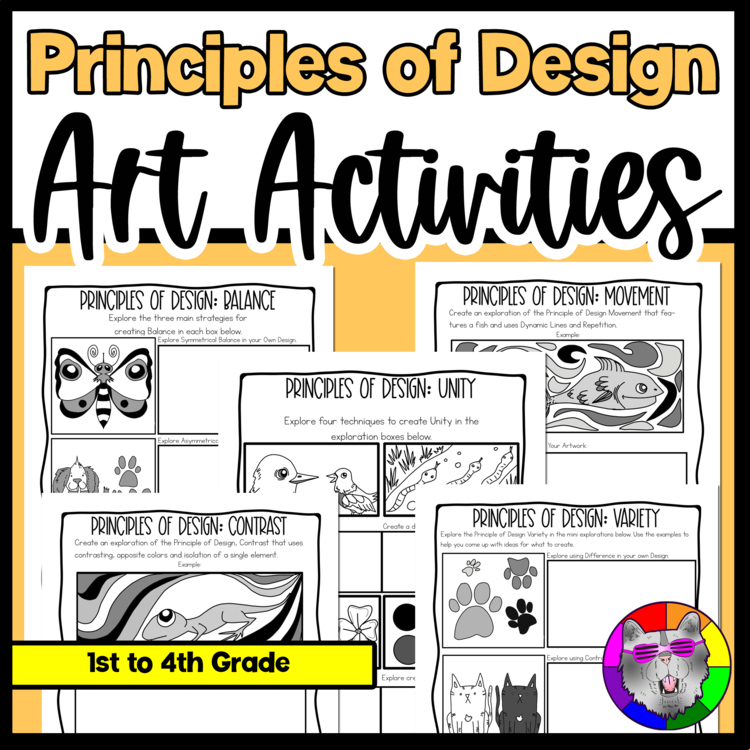 Principles of Design Workbook (Primary)Grades 1 to 4A Principles of Design workbook for primary and elementary students.See the lesson
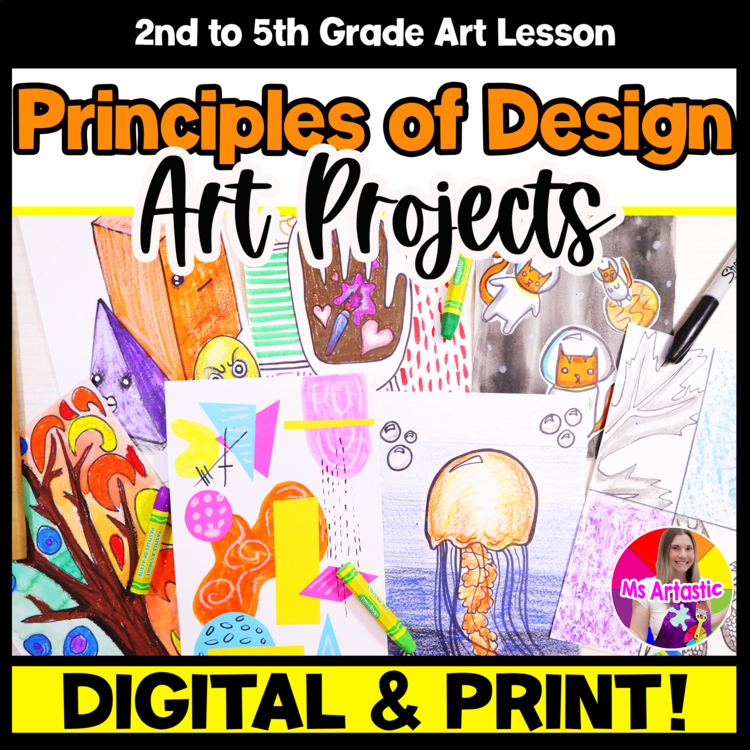 Principles of Design BookletGrades 3 to 68 core Principles of Design lessons, each with a visual introduction page.See the lesson
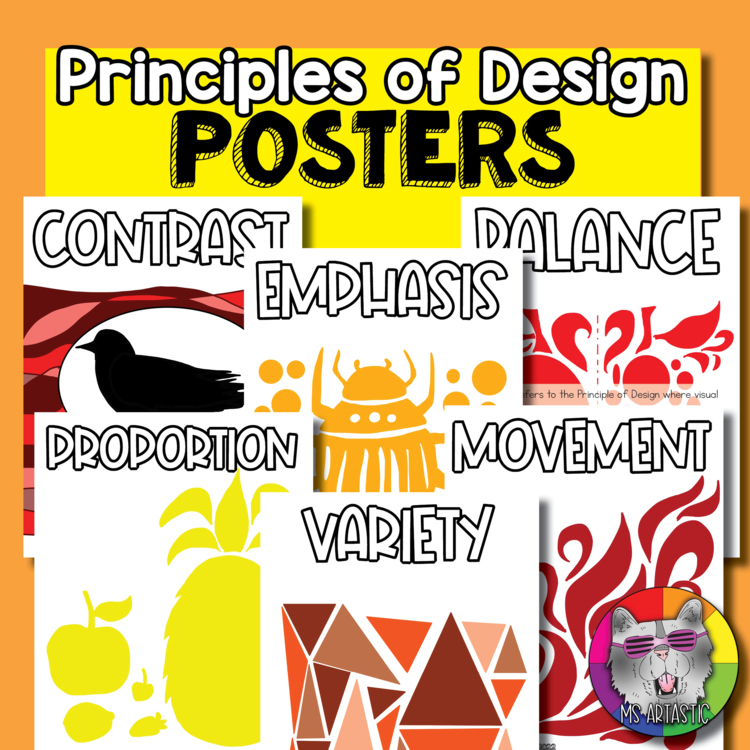 Principles of Design PostersGrades 4 to 7Posters in two versions: title only, or title with definition.See the lesson
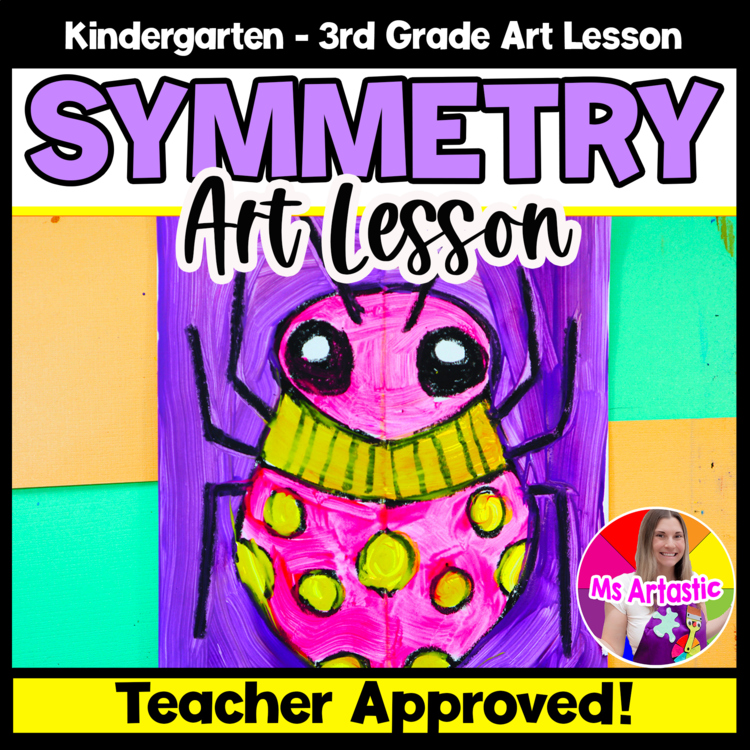 Symmetry Balance BugsGrades K to 3See the lesson
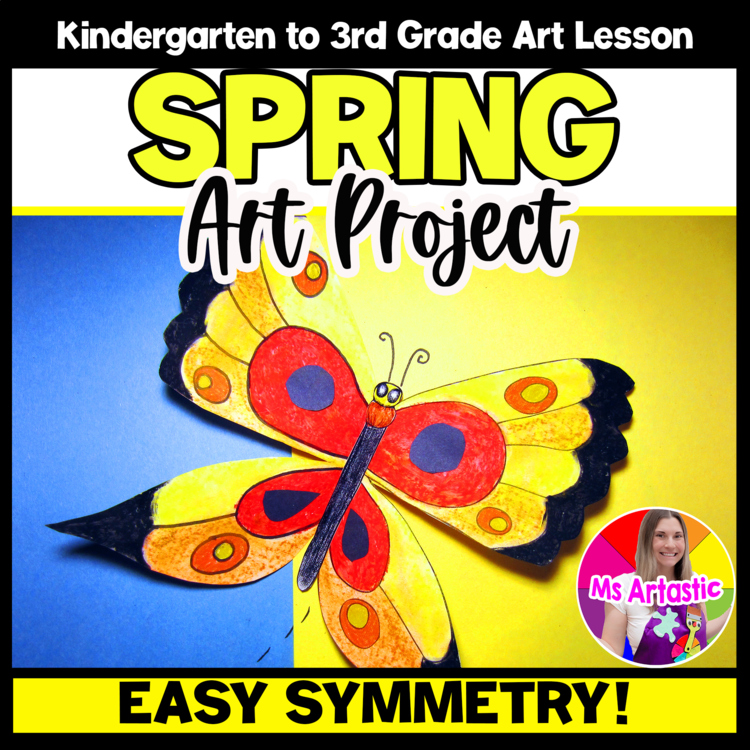 Butterfly Symmetry Art LessonGrades 1 to 4A step-by-step butterfly symmetry drawing tutorial.See the lesson
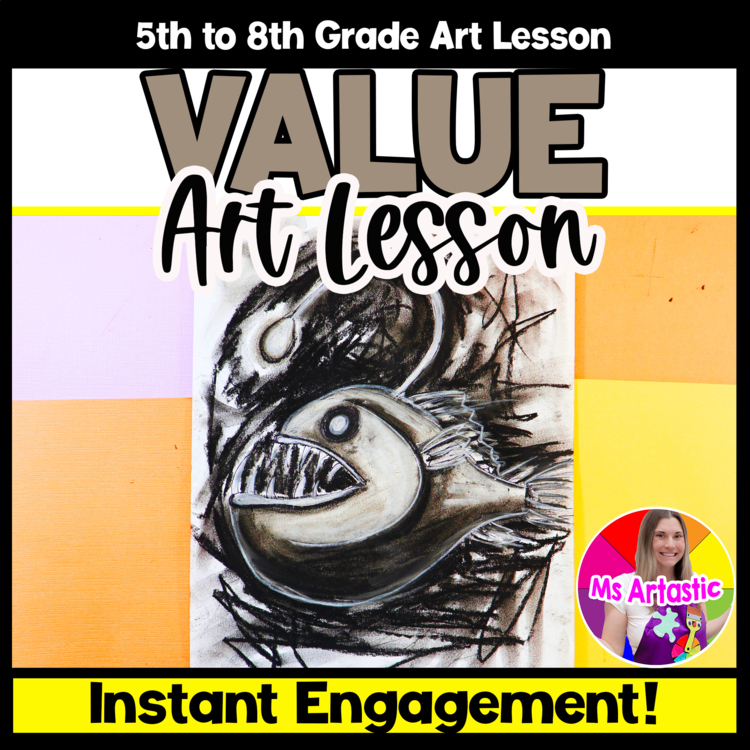 Anglerfish Value Art LessonGrades 5 to 8See the lesson
 Kindergarten Back to School Name Art LessonGrades K to 2See the lesson
Free blog lessons and ideas


Free tools
Videos to watch together
 Teaching the Principles of DesignWatch on YouTube
 Make a Silly Symmetry Bug! Principle of Design: Balance Art Lesson for KIDS!Watch on YouTube
 Principle of Design: Contrast Art Project, Contrast Art Lesson for KIDS!Watch on YouTube
 Art Lesson: Bird with Movement, Principle of Design: Movement for Kids!Watch on YouTube
Supplies and picture books
As an Amazon Associate I earn from qualifying purchases.
Questions teachers and parents ask
What are the Principles of Design?
Common lists include balance, contrast, emphasis, movement, pattern or repetition, proportion, rhythm, unity and variety. Textbooks group and name them a little differently.
Should I teach the Elements of Art first?
Usually, yes. Students need words like line, shape and color before they can talk about how those parts are arranged.
What is an easy way to teach balance?
Symmetry is a friendly starting point. Fold a paper in half, draw on one side and mirror it on the other, then compare it with an asymmetrical design.
What grade should start the Principles of Design?
Young students can explore pattern and symmetry in the primary grades. Most programs go deeper in upper elementary and middle school.
The Artastic Collective art curriculum
Full art lessons, videos and units for the whole year, ready when you are. Monthly, yearly and VIP plans.
More art lessons to explore
Elements of Art
