

Art History Timeline / Ukiyo-e Prints
Ukiyo-e Prints for Kids: Art History, Artists and an Easy Art Activity
Ukiyo-e means pictures of the floating world. Japanese artists carved pictures into wood blocks and printed them in colour. They showed waves, mountains, actors and everyday life.
For teachers
Woodblock prints were a team effort between the designer, carver, printer and publisher, which made images affordable for city buyers in Edo (Tokyo). Landscape series by Hokusai and Hiroshige became hugely popular in the 1830s. Japanese prints later influenced Impressionist and Post-Impressionist artists in Europe.
What to look for
Pull up an artwork from this time and go on a looking hunt. Here is what to spot.
- Flat areas of colour with clear outlines
- Big shapes in front and small ones far away
- Waves, rain, snow and Mount Fuji
- Prussian blue colour
Meet the artists
Katsushika Hokusai
1760 to 1849
He made The Great Wave when he was about 70 years old.
Katsushika Oi
about 1800 to about 1866
She was Hokusai's daughter and a skilled painter who worked with her father.
Utagawa Hiroshige
1797 to 1858
He made print series of famous views, including 100 Famous Views of Edo.
Artworks to look at closely
Click any artwork to zoom in on The Met website. Big screen, slow looking, lots of talking.
 Under the Wave off Kanagawa (Kanagawa oki nami ura), or The Great Wave, from…Katsushika Hokusai, ca. 1830 to 32The Metropolitan Museum of Art, Open AccessSee it at The Met
 Sudden Shower at Shōno, from the series Fifty-three Stations of the TōkaidōUtagawa Hiroshige, 1834 to 35The Metropolitan Museum of Art, Open AccessSee it at The Met
 South Wind, Clear Sky (Gaifū kaisei), also known as Red Fuji, from the…Katsushika Hokusai, ca. 1830 to 32The Metropolitan Museum of Art, Open AccessSee it at The Met
Try it
An easy art activity you can do with paper and whatever drawing tools you have.
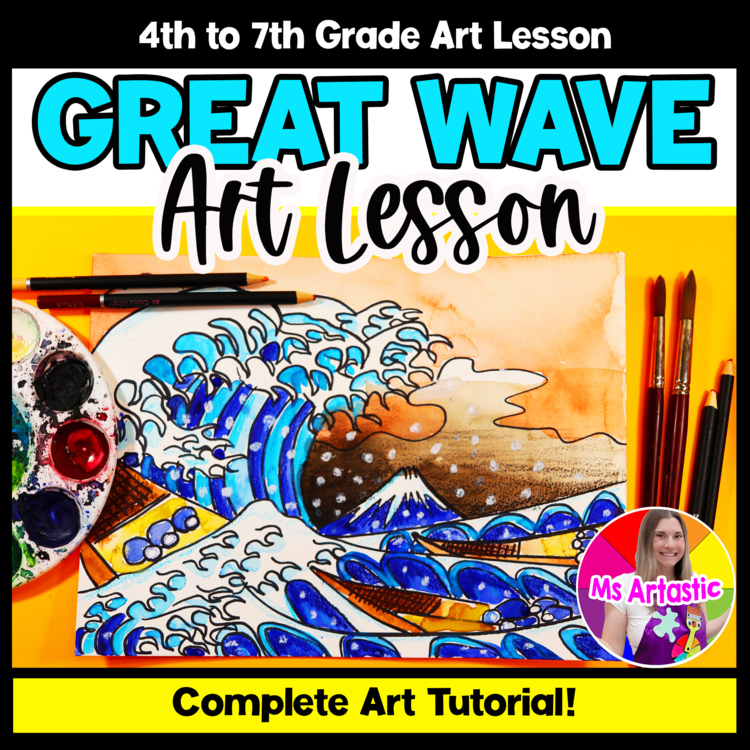
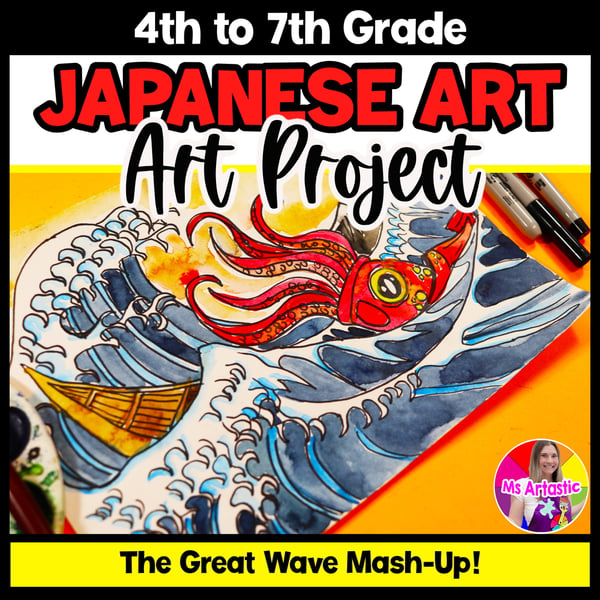
Draw a big wave with curling claw-like tips in the front and a tiny mountain in the back. Outline with black marker, then colour in flat areas with blues only. Notice how close things look bigger.
Ms Artastic lessons
Ready-to-teach lessons that connect to this part of the timeline.
Books for your art shelf
- The Met Hokusai: He Saw the World in a Wave by Susie Hodge
As an Amazon Associate I earn from qualifying purchases.
Questions teachers and parents ask
What is ukiyo-e?
Ukiyo-e means pictures of the floating world. Japanese artists carved pictures into wood blocks and printed them in colour. They showed waves, mountains, actors and everyday life.
What time period is ukiyo-e from?
Time period: Late 1600s to 1800s. Where: Japan.
Who are some famous artists of ukiyo-e?
Katsushika Hokusai (1760 to 1849), Katsushika Oi (about 1800 to about 1866) and Utagawa Hiroshige (1797 to 1858).
What is an easy art project for kids about ukiyo-e?
Draw a big wave with curling claw-like tips in the front and a tiny mountain in the back. Outline with black marker, then colour in flat areas with blues only. Notice how close things look bigger.
The Artastic Collective art curriculum
Full art lessons, videos and units for the whole year, ready when you are. Monthly, yearly and VIP plans.
Japanese art video lessons
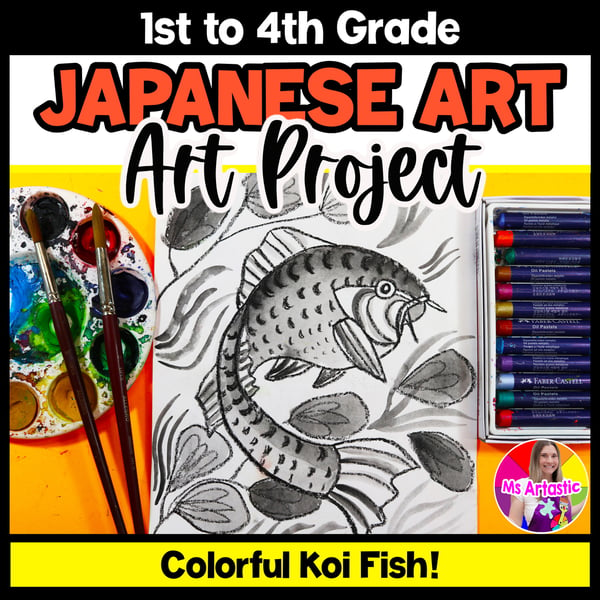
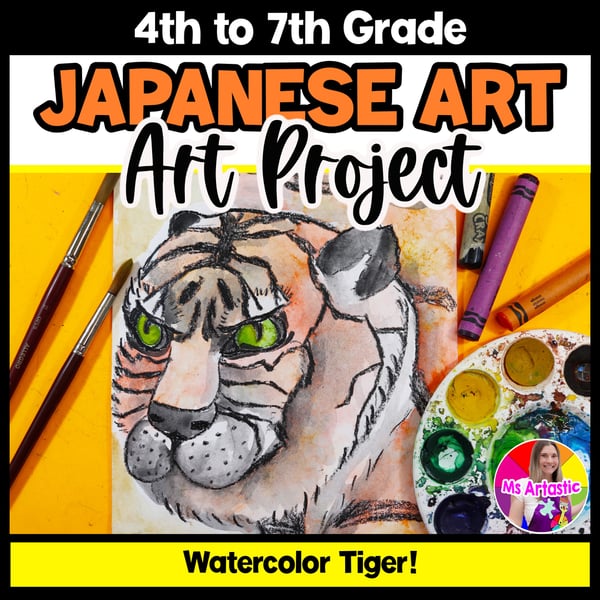
Press play and paint along with me. Each video lesson comes with a printable lesson plan and a QR code, so it is ready for the classroom or the kitchen table.
🎬 Video lessons
Teach it with a video lesson
Each one has a step-by-step video tutorial and the printable lesson plan.
