

New Year Art Lesson for Kids: Cozy New Year Mouse Art & Literacy Activity for January
Start January with a cozy New Year art lesson for kids. Learn how to teach a step-by-step New Year Mouse art project with literacy integration, writing prompts, and book pairings for elementary classrooms and homeschool.

Affiliate Disclosure
This post contains Amazon affiliate links. If you choose to purchase through these links, I may earn a small commission at no additional cost to you. Thank you for supporting my work and helping me continue to create free art education content.
A Cozy New Year Art & Literacy Lesson to Begin January Gently
There is something especially tender about the days just after the holidays. The classroom feels quieter. Homeschool routines settle into a slower rhythm. Students return carrying big emotions — excitement, nervousness, tiredness, hope — often all at once. January doesn’t arrive with fireworks in the classroom. It arrives softly. And I’ve learned over the years that the best way to honor that transition is through art that feels calm, meaningful, and welcoming.
This is one of my favorite moments in the school year to introduce a New Year art lesson that feels more like storytelling than instruction. When students are given a character to connect with, a moment to reflect on, and a step-by-step process that builds confidence, the classroom atmosphere shifts almost immediately. There is less pressure. More focus. More creativity. More connection.
One of my favorite January projects uses a simple character — a small mouse welcoming the New Year — to anchor both art and literacy. The project is gentle enough for students who are still easing back into routines, but rich enough to support thoughtful discussion, writing, and reflection. It works beautifully in elementary classrooms, art rooms, and homeschool settings, and it naturally invites cross-curricular learning without feeling forced.
I want to walk you through how you can teach this New Year art and literacy lesson step by step in your own space. You can absolutely adapt this idea to your grade level, materials, or time constraints. Think of this as a framework you can make your own.
Begin with Story, Not Supplies
Before any drawing happens, I always start with conversation. January is full of “new” — new calendars, new goals, new routines — and kids feel that shift even if they can’t fully articulate it yet. I like to ask open-ended questions such as: What does the New Year feel like? Does starting something new feel exciting, nervous, or both? What might a small character feel as the clock gets closer to midnight?
Introducing the mouse as a character at this stage helps students emotionally connect to the lesson. We imagine where the mouse is, why it’s awake so late, and what it might be thinking as the New Year arrives. This turns the lesson into a narrative experience rather than a task, which makes a huge difference for engagement.
This is also a perfect moment to read a picture book about new beginnings or fresh starts. Some wonderful book pairings to consider include:

Tomorrow I’ll Be Brave by Jessica Hische
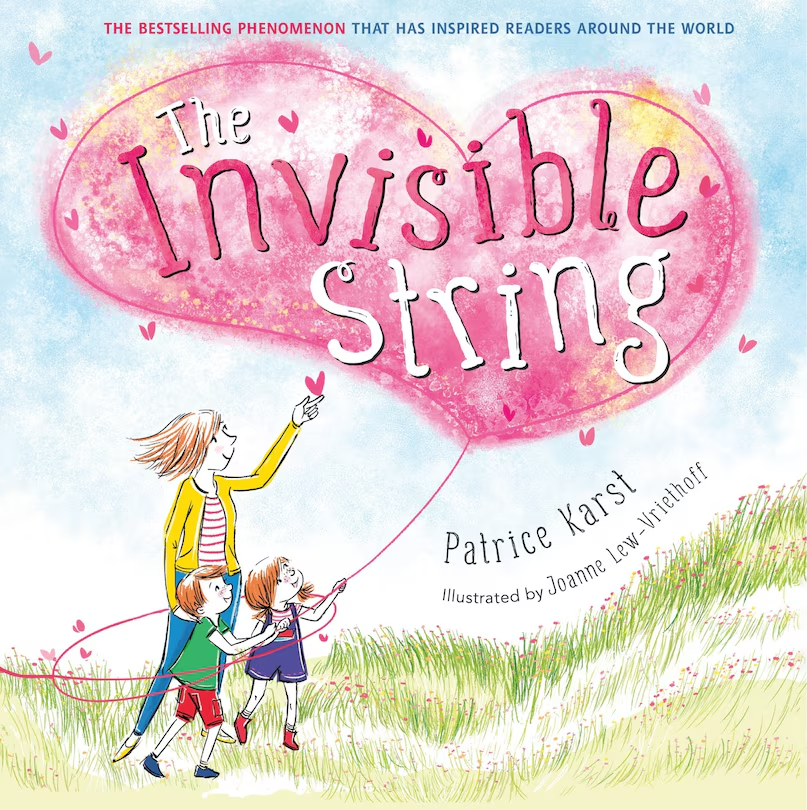
The Invisible String by Patrice Karst
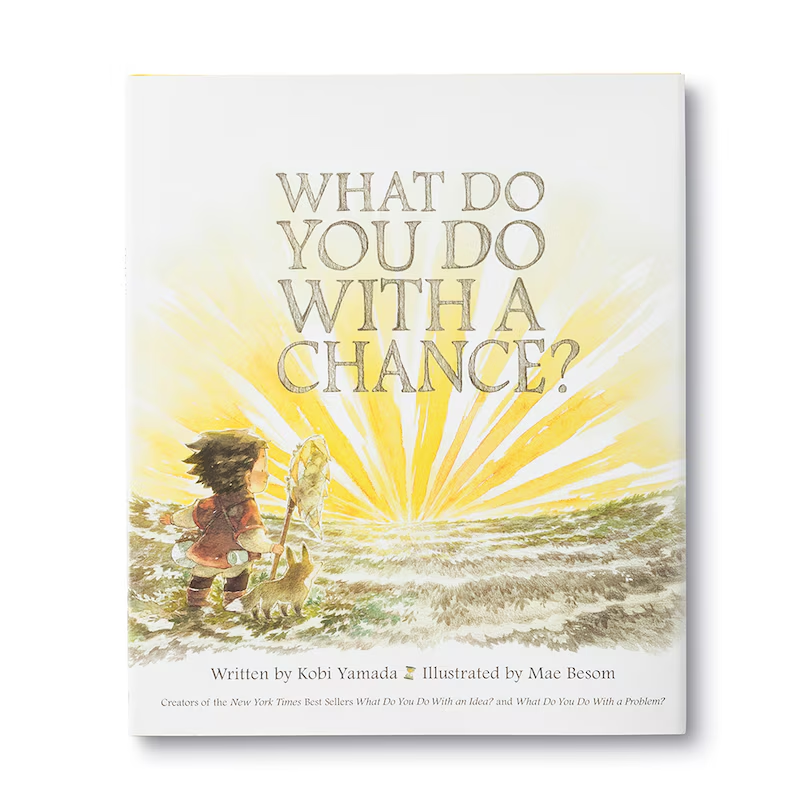
What Do You Do With a Chance? by Kobi Yamada
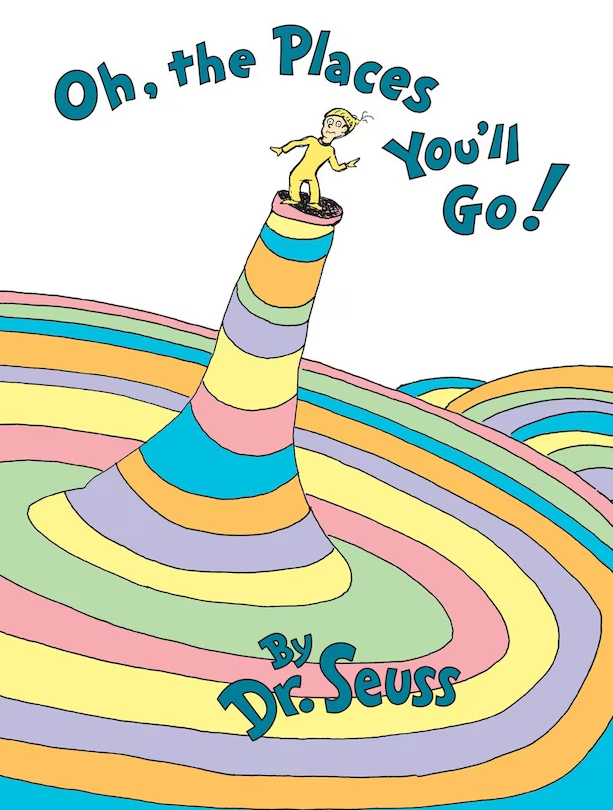
Oh, the Places You’ll Go! by Dr. Seuss
These books naturally support conversations about growth, reflection, and change and can later be connected directly to student writing.
Step One: Guided Drawing Builds Confidence

Once students feel grounded in the story, it’s time to draw. Guided drawing works especially well in January because it removes the fear of not knowing where to start. We begin with simple shapes for the mouse’s head and body, slowly layering in details like ears, eyes, whiskers, and paws. Each step builds on the last, and students begin to trust the process.
The mouse wears a party hat to symbolize celebration and holds a clock showing midnight, grounding the artwork in the idea of the New Year. As students draw, I remind them that everyone’s mouse will look different — and that difference is something to celebrate. This moment is all about observation, patience, and confidence, not perfection.
If you’d like a fully guided version of this drawing process with visual supports and teaching pages, you can explore the complete New Year Mouse Art Lesson here:
https://www.teacherspayteachers.com/Product/New-Years-Art-Lesson-New-Year-Mouse-Art-Project-Winter-Art-Activity-January-Art-15153889#show-price-update
Step Two: Adding Color, Texture, and Calm

After the drawing is complete, students move into color and texture. I often begin with wax crayons or oil pastels so students can trace their lines, add patterns, and bring personality into their mouse. Once paint is applied over top, the resist effect creates a moment of surprise and delight as details reappear through the color.
This stage of the lesson is wonderfully calming. The room quiets. Students focus. Brushes move slowly. Backgrounds can stay simple — gentle washes, repeated lines, or soft patterns. The goal here is not complexity, but presence. January art doesn’t need to be loud to be powerful.
Again, if you prefer having everything planned, paced, and visually supported, the full lesson with step-by-step instructions and materials is available here:
https://www.teacherspayteachers.com/Product/New-Years-Art-Lesson-New-Year-Mouse-Art-Project-Winter-Art-Activity-January-Art-15153889#show-price-update
Step Three: Connecting Art to Literacy Naturally

Once students have created their artwork, literacy flows easily. Because they already have a character and a moment in mind, writing feels purposeful rather than intimidating. Younger students might write a few sentences about what the mouse hopes for in the New Year. Older students can write a short narrative, reflection, or comparison between the old year and the new one.
Reading integration fits beautifully here as well. Students can respond to a New Year–themed book, write from the mouse’s perspective, or reflect on their own hopes and goals using the artwork as inspiration. The art becomes an anchor — something concrete to return to when words feel hard.
This is one of the reasons I love art-first literacy integration. When students create before they write, the blank page feels far less overwhelming.
Step Four: Reflection and Sharing

To close the lesson, I always build in reflection. This might look like a quiet written response, a partner share, or a simple gallery walk. Students can talk about one thing they’re proud of, one thing they learned, or one hope they’re carrying into the New Year. These moments of reflection help students internalize the experience and reinforce the idea that learning is about growth, not speed.
If you’d like this entire lesson — including the guided drawing, literacy pages, writing prompts, reflections, and teaching supports — fully planned and ready to use, you can find it here:
https://www.teacherspayteachers.com/Product/New-Years-Art-Lesson-New-Year-Mouse-Art-Project-Winter-Art-Activity-January-Art-15153889#show-price-update
A Free New Year Art Lesson You Can Watch Right Now
If you’re looking for another gentle way to ease into January — especially one that requires almost no prep — I also just released a free New Year’s Kitty directed drawing tutorial on my YouTube channel. This lesson pairs beautifully with the New Year Mouse project or works perfectly on its own as a calm, creative reset after the winter break.
The New Year’s Kitty drawing is designed to be approachable and comforting. Students follow along step by step as the character comes to life, which makes it ideal for the first few days back when confidence might be low and routines are still settling. Directed drawings like this are especially helpful in January because they remove the fear of “not knowing what to draw” and allow students to simply enjoy the process.
This lesson also connects naturally to literacy. After drawing, students can write a short story about the kitty welcoming the New Year, reflect on what the kitty hopes for in the months ahead, or even compare the kitty’s New Year to their own. It works well as a journal prompt, a quick-write, or a discussion starter, and it’s flexible enough for classroom or homeschool use.
You can watch and teach the New Year’s Kitty directed drawing tutorial for free here:
https://www.youtube.com/watch?v=uK2kVqT2Y8c
If you enjoy using art as a soft entry point into learning — especially during seasonal transitions — you may want to explore more free lessons like this on my YouTube channel. I regularly share directed drawings, art tutorials, and creative ideas you can use anytime you need a low-pressure, engaging activity for kids.
This kitty lesson and the New Year Mouse project together create a lovely January pairing: two gentle characters, two moments of reflection, and lots of opportunities for storytelling, writing, and creativity as the year begins.
A Gentle Way to Begin the Year
January doesn’t have to begin with pressure. It can begin with intention. With creativity. With a quiet moment where students feel capable, safe, and inspired. This New Year Mouse art and literacy lesson is one small way to create that space — whether you build it yourself or use a ready-made plan.
Sometimes the most meaningful starts are the soft ones.
Warmly,
Kathleen
Ms Artastic


