

Black History Month Art Lessons for Kids: Artists, History, and Meaningful Classroom & Homeschool Ideas
Explore Black History Month through art with detailed artist studies, history, and creative approaches for classrooms and homeschool families.

Black History Month is a time to slow down and teach with intention.
For teachers and homeschool families, it can feel overwhelming to figure out how to approach this month in a way that is respectful, meaningful, and developmentally appropriate — especially through art. Black History Month isn’t about rushing through names or completing surface-level projects. It’s about honoring voices, stories, creativity, and cultural impact in a way students can truly understand.
Art is one of the most powerful entry points for this learning.
Through studying Black artists, students are invited to explore identity, storytelling, resilience, culture, symbolism, and self-expression — not just through facts, but through making. Whether you’re teaching a full classroom or guiding learning at home, art allows students to respond thoughtfully rather than copy, and to connect personally rather than passively consume information.
This post is designed to help you teach Black History Month through art with depth and confidence, by introducing influential Black artists, exploring their histories and styles, and offering ideas for how students can respond creatively at any age.
This post includes Amazon affiliate links. If you choose to shop through them, it supports my work at no extra cost to you. If you’re looking for art materials, you can explore all of my favorite classroom-tested art supplies through my curated Amazon art supply collection.
Why Studying Black Artists Through Art Matters
Teaching Black History Month through art allows students to see history as alive, expressive, and human.
When students study Black artists, they aren’t just learning names or dates — they’re learning how artists respond to the world around them. They see how art can reflect personal experience, cultural identity, social injustice, joy, resistance, and imagination. This makes Black History Month art lessons meaningful across grade levels, from early elementary through high school.
A strong Black History Month art approach focuses on:
- Understanding the artist’s story and context
- Exploring artistic style and visual language
- Responding creatively rather than copying
- Honoring identity and lived experience
Below are several influential Black artists whose work lends itself beautifully to classroom and homeschool art exploration.
Faith Ringgold: Storytelling Through Art
Faith Ringgold is best known for her story quilts, which combine painting, pattern, text, and fabric to tell powerful narratives about family, identity, race, and social justice.
Ringgold’s work is especially meaningful for younger students because it naturally blends art and literacy. Her quilts read like visual stories, making them accessible and emotionally resonant. Students can explore how images and words work together, and how personal stories deserve space in art.
Art style highlights:
- Bold colors and strong outlines
- Repeating patterns and borders
- Narrative storytelling
- Text integrated into visual art
Classroom & homeschool art ideas:
- Create a paper “story quilt” using drawn squares
- Combine drawing and writing to tell a personal story
- Use patterned borders to frame student artwork
Faith Ringgold’s work opens the door to conversations about voice, belonging, and storytelling, making her an ideal starting point for Black History Month.
Alma Thomas: Color, Joy, and Movement
Alma Thomas was a painter known for her vibrant abstract works filled with color, rhythm, and movement. She began her professional art career later in life, which makes her story especially powerful for students learning about perseverance and lifelong creativity.
Thomas’s paintings often resemble mosaics or patches of color, creating energy and joy without using recognizable images. This makes her work incredibly accessible for all ages, including very young learners.
Art style highlights:
- Bright, joyful color palettes
- Repetition and pattern
- Abstract shapes
- Emphasis on movement and rhythm
Classroom & homeschool art ideas:
- Create abstract paintings using repeated brushstrokes
- Explore color theory through joyful palettes
- Focus on how colors can express emotion
Alma Thomas’s work reminds students that art doesn’t have to look “real” to be meaningful — it can simply feel alive.
Kehinde Wiley: Portraiture and Power
Kehinde Wiley is known for his large-scale portraits that place modern Black individuals into compositions inspired by classical European paintings.
His work invites deep discussion around representation, identity, power, and visibility. Wiley’s portraits challenge traditional ideas of who is seen as important in art history, making his work especially impactful for older elementary, middle, and high school students.
Art style highlights:
- Realistic portraiture
- Decorative, patterned backgrounds
- Strong use of symbolism
- Reimagining historical art traditions
Classroom & homeschool art ideas:
- Create symbolic portraits using modern clothing and poses
- Design decorative backgrounds that represent identity
- Discuss who we see represented in museums and why
Kehinde Wiley’s art encourages students to think critically about who art history has traditionally centered — and who it has not.
Augusta Savage: Sculpture, Strength, and Resilience
Augusta Savage was a sculptor and educator during the Harlem Renaissance who faced significant barriers due to racism and sexism, yet remained deeply committed to teaching and supporting young artists.
Savage’s work often focused on expressive faces and human emotion, making sculpture an especially meaningful medium when studying her legacy.
Art style highlights:
- Expressive sculptural forms
- Focus on human emotion
- Realistic yet emotionally charged features
Classroom & homeschool art ideas:
- Create expressive faces using clay or modeling material
- Explore how art can show emotion without words
- Discuss perseverance and artistic legacy
Her story offers students an example of resilience, mentorship, and the importance of creative community.
Jean-Michel Basquiat — Art, Identity, and Raw Expression
One of the most compelling artists to explore during Black History Month — especially with older students — is Jean-Michel Basquiat.
In this, we’ll dive deeply into Basquiat’s life, history, and unique artistic language, exploring how his work blends symbolism, text, raw mark-making, and cultural commentary in ways that continue to resonate with students today.
We’ll explore:
- Basquiat’s background and rise as an artist
- His visual symbols and recurring imagery
- How to teach his work respectfully
- Art ideas inspired by his style (without copying)
Art as Activism: Books I Highly Recommend for Teaching Black History Month Through Art
When teaching Black History Month through art, I truly believe that the resources we choose matter.
Art can be a powerful tool for helping students understand identity, empathy, justice, and community — but it needs to be grounded in thoughtful conversation, respectful language, and developmentally appropriate opportunities to reflect and create. Over the years, I’ve come across a few art books that I don’t just like… I highly recommend. These are books I would confidently use in my own classroom and share with homeschool families because they treat young artists as capable, thoughtful humans who can make sense of the world through creativity.
This section includes Amazon affiliate links. If you choose to purchase through them, it supports my work at no extra cost to you. If you’re looking for art materials to pair with these books, you can explore all of my favorite, classroom-tested art supplies through my curated Amazon art supply collection.
Anti-Racist Art Activities for Kids: Creating Change Through Creativity
One of the most impactful art-teaching resources I’ve ever come across is
Anti-Racist Art Activities for Kids.
This book is not about quick crafts or surface-level projects — it’s about empowering children to understand themselves and the world around them through art. It begins with age-appropriate explanations of race, racism, and anti-racism, then guides students through creative projects that move from self-reflection to action.
What makes this book so powerful is how it’s structured around six meaningful themes that naturally align with art education:
- Identity: Students explore who they are and create symbols that represent their unique experiences.
- Culture: Art activities invite students to honor their own culture while learning to respect others.
- Community: Students examine their surroundings and learn how art can connect people and places.
- Empathy: Creative problem-solving activities help students understand equity and compassion.
- Justice: Students respond artistically to real-world issues in thoughtful, age-appropriate ways.
- Activism: Art becomes a vehicle for communication, voice, and change — from designing murals to creating mini billboards or writing visual messages.
This book also introduces students to a wide range of art materials, including paint, clay, textiles, and recycled materials, making it incredibly versatile for classrooms and homeschool settings alike. The included glossary is especially helpful for teachers and parents navigating anti-racist language with care and clarity.
If you’re looking for one art book that truly supports meaningful Black History Month teaching, this is the one I always recommend first.

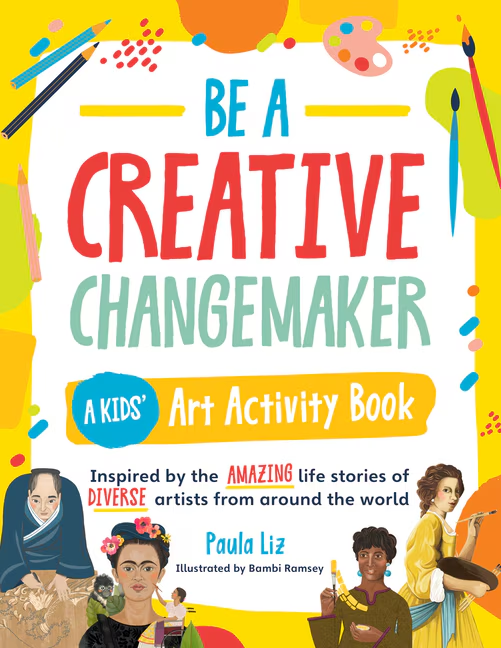
Be a Creative Changemaker: Learning From Artists Around the World
Another resource I love for Black History Month (and honestly, year-round) is
Be a Creative Changemaker.
This book introduces students to 25 diverse artists from around the world, sharing their life stories alongside hands-on art activities inspired by their work. What makes this book especially strong for teaching is how it blends biography, visual inspiration, and making into one cohesive experience.
Students learn that artists don’t all come from the same place, work in the same way, or create for the same reasons. Instead, they discover how culture, history, and personal experience shape artistic voice.
Some of the featured artist-inspired projects include:
- Telling stories through scroll painting
- Creating symbolic sculptures
- Exploring animal motifs and cultural patterns
- Designing textiles and fabric art
- Building sculptural forms and imaginative structures
This book is ideal for upper elementary and middle school, though many of the activities can be adapted for younger learners or explored more deeply with older students. It encourages curiosity, respect, and a broader understanding of global art — which fits beautifully into Black History Month learning.
The Artivist: Where Art Meets Action
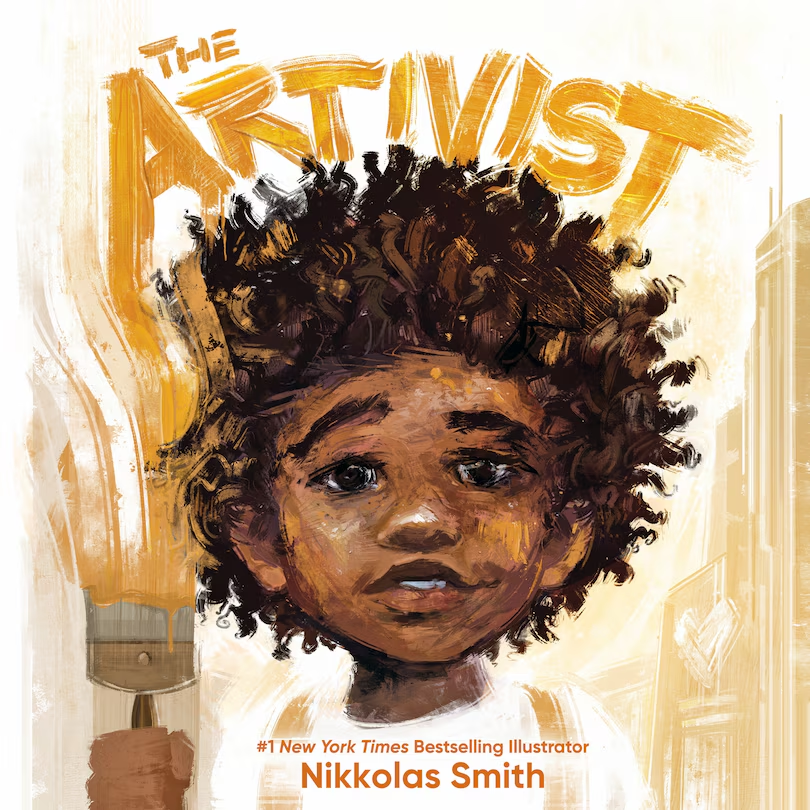
For younger students or for a powerful read-aloud experience, I highly recommend
The Artivist by Nikkolas Smith.
This picture book introduces the idea of being an “artivist” — someone who uses art to speak up, ask questions, and make the world a better place. Through stunning illustrations and accessible language, students see how creativity and activism can exist together in everyday life.
What I love most about this book is that it doesn’t overwhelm students. Instead, it gently shows them that their ideas, voices, and artwork matter, even at a young age. It’s a beautiful way to start conversations about fairness, empathy, and how art can communicate messages when words feel hard.
This book pairs especially well with:
- Symbolic drawing projects
- Mural design activities
- Poster-making with a message
- Community-focused art discussions
It’s a wonderful bridge between storytelling and student artmaking, making it perfect for both classrooms and homeschool families.
Pairing These Books With Art Materials
All of these books invite students to experiment with a wide variety of art materials — from drawing and painting to sculpture, collage, and mixed media. If you’re looking for reliable supplies that work well in real teaching environments, you can explore all of my favorite art materials in one place through my Amazon art supply collection.
I’ve curated this list specifically for teachers and families, focusing on materials that are:
- Easy to use with kids
- Flexible across grade levels
- Suitable for expressive and symbolic artmaking
Check out my favorite art supplies here.
Jean-Michel Basquiat: Identity, Symbols, and Raw Expression in Art
One of the most powerful artists to explore during Black History Month—especially with older elementary, middle, and secondary students—is Jean-Michel Basquiat. Basquiat’s work speaks to students because it feels raw, layered, emotional, and honest. His art doesn’t try to be neat or perfect, and that alone gives kids permission to create freely—but what’s even more important is that Basquiat’s work is deeply connected to history, race, identity, power, and resistance, which makes him a meaningful artist to study when it’s taught thoughtfully.
Basquiat was born in Brooklyn, New York, in 1960 to a Haitian father and a Puerto Rican mother. As a teen, he became known for graffiti-style writing under the name SAMO, using public spaces to share sharp, poetic messages about society. He later moved from the streets into galleries, becoming a major figure in Neo-Expressionism. His rise was fast—and complicated—because he navigated fame, racism in the art world, and the pressure of being one of the few Black artists in predominantly white gallery spaces. He died at 27, but his influence remains huge, and students often connect to his story because it shows what it looks like to use art as a voice when the world isn’t always listening.

Basquiat’s art style and “visual language” (what students should notice)
Basquiat’s work is instantly recognizable because he created a visual language that feels like a mix of drawing, writing, symbol-making, and collage-thinking all happening at once. Students will often notice his repeated symbols—especially crowns, which can represent power, worth, recognition, and honoring someone who was overlooked. They’ll notice expressive faces, skull-like imagery, and anatomical references, and they’ll see words and phrases—sometimes repeated, sometimes crossed out (which often makes the words feel even more important, not erased). Basquiat’s linework is bold, urgent, and expressive, and his color choices often feel intense, energetic, and emotionally charged.
A key teaching point for teachers and homeschool parents is this: Basquiat wasn’t being “messy”—he was being intentional. His paintings show students that art can communicate big ideas using symbols, text, and emotion, and that “perfect” is not required for powerful work.

Basquiat books I recommend (what each one offers + best age group)
Because Basquiat can be introduced in very different ways depending on age, I love using books that match student maturity and attention span. Here are the best Basquiat book options—with what they’re best for:
For teachers (or older students) who want the deepest dive with lots of images:
If you want a resource that truly supports you as the educator, I highly recommend Jean-Michel Basquiat. 40th Ed. (45th Edition). This is the one that helps you teach with confidence because it includes tons of visuals and context you can draw from when planning lessons.
For grades 2–6 (poetry + powerful emotional connection):
Life Doesn’t Frighten Me: A Poetry Picture Book pairs Maya Angelou’s words with Basquiat’s artwork. This is incredible for discussion around fear, bravery, voice, and resilience, and it naturally leads into student art about emotions, symbols, and expressive marks.
For K–5 (a true storybook introduction to Basquiat):
Radiant Child: The Story of Young Artist Jean-Michel Basquiat is a gorgeous biography that focuses on his childhood and creativity. It’s ideal for read-aloud + response art projects, especially when you want students to understand that artists are real people with real stories.
For K–3 (short, simple biography that’s super accessible):
Jean-Michel Basquiat (Little People, BIG DREAMS) is great when you want a quick, kid-friendly introduction that still honors his story.
For preschool + early learners (a gentle “first Basquiat”):
Basquiat Colors (Board Book) is perfect for focusing on bold color, reminding little ones that art can be energetic and expressive.
Art supplies and mediums that work beautifully for Basquiat-inspired projects
Basquiat-inspired art is all about bold marks, layering, symbolism, and freedom, so I recommend materials that support that—like black markers, paint markers, oil pastels, acrylic/tempera paint, and mixed media paper. If you want to make it super easy, you can point teachers and families to my Amazon list of favorite art supplies (this is where I keep all my go-to classroom and homeschool materials). And yes—my Amazon art supply favorites are especially helpful if you’re trying to plan fast and want reliable supplies that actually work with kids.
Basquiat art lessons (ready-to-teach options from my TPT store)
If you want students to create Basquiat-inspired work in a way that’s structured, age-appropriate, and respectful, here are my ready-to-teach lessons (each one focuses on students responding to Basquiat’s ideas—not copying a specific artwork):
- Basquiat Crown Art Lesson (Kindergarten) — a simple, powerful symbol project for little learners
- Basquiat Self-Portrait Art Project — identity + symbolism (great for upper elementary)
- Basquiat Face Artwork Art History Lesson — expressive faces + visual language
- Basquiat Dinosaur Art Project — high engagement (amazing for reluctant artists)
- Basquiat-Inspired Untitled Lesson — layering + meaning-making
- Basquiat Skull Art Lesson — best for older students (strong symbolism + expression)
- Basquiat Art History Project Lesson — broader context + student response work


And if anyone is building their supply stash while planning these lessons, you can point them again to my curated Amazon art supply list so they can grab what they need in one place.
Alma Woodsey Thomas: Color, Joy, and a Lifetime of Creativity
Before wrapping up this Black History Month art guide, it’s important to highlight an artist whose work brings joy, perseverance, and pure color into the classroom in a way that feels both accessible and deeply meaningful: Alma Woodsey Thomas.
Alma Thomas was born in 1891 in Columbus, Georgia, and later moved with her family to Washington, D.C., where she would spend most of her life. She lived through segregation, the Civil Rights Movement, and enormous social change — and yet her artwork is often described as joyful, radiant, and full of life. That contrast alone makes her story powerful for students.
What many people don’t realize is that Alma Thomas didn’t gain national recognition until later in life. She spent decades working as an art educator before fully dedicating herself to painting after retirement. In 1972, she became the first Black woman to have a solo exhibition at the Whitney Museum of American Art, a historic achievement that students find incredibly inspiring when they learn that creativity does not have an expiration date.
Alma Thomas’s Art Style (What to Look For)
Alma Thomas is best known for her abstract, mosaic-like paintings made up of short, repeated brushstrokes arranged in rhythmic patterns. Her work often feels like it’s moving — almost shimmering — and she frequently drew inspiration from nature, gardens, space, music, and the world around her.
Key features students will notice in her work:
- Bright, joyful color palettes
- Repeating shapes and brushstrokes
- A sense of rhythm and movement
- Abstract compositions inspired by nature
- No need for realism to communicate emotion
This makes Alma Thomas an ideal artist for all ages, especially when teaching color theory, pattern, repetition, and emotional expression through art. Her work gives students permission to explore color boldly and focus on process rather than perfection.
Alma Woodsey Thomas Books to Use in Classrooms and Homeschool
Choosing the right book makes teaching Alma Thomas feel grounded and meaningful. Below are high-quality book pairings, with guidance on what each one offers and who it’s best for.
For Young Children (Ages 4–8)
Ablaze with Color: A Story of Painter Alma Thomas
This illustrated biography introduces Alma Thomas in a warm, accessible way, focusing on her love of color, nature, and perseverance. It’s perfect for early elementary classrooms and homeschool read-alouds, especially when followed by a color-focused art activity.
For Upper Elementary Through Middle School
Alma’s Art
This book blends story and inspiration, showing how Alma Thomas saw beauty everywhere and expressed it through art. It’s a great choice for students who are beginning to understand art as personal expression and who benefit from seeing creativity modeled as a way of engaging with the world.
For Teachers and Older Students
Alma W. Thomas: Everything Is Beautiful
This is an excellent teacher reference book, filled with images of Thomas’s work and deeper context about her career and artistic approach. It’s ideal for lesson planning, professional learning, or sharing excerpts with older students.
This post includes Amazon affiliate links. If you choose to purchase through them, it supports my work at no extra cost to you.
Alma Woodsey Thomas Art Lessons to Pair With This Study
If you’d like to bring Alma Thomas into your classroom or homeschool in a structured, age-appropriate way, here are some ready-to-teach art lessons designed to help students respond to her style without copying her work.
- Alma Woodsey Thomas Sunset Tempera Painting Art Lesson — focuses on color, movement, and layered brushstrokes
- Alma Woodsey Thomas Black History Month Art Lesson — a strong introduction to her life and style
- Alma Woodsey Thomas Art History Lesson — ideal for upper elementary exploration
- Alma Woodsey Thomas Pattern & Color Art Lesson — great for teaching repetition and rhythm
- Alma Woodsey Thomas Artist Portrait Lesson — combines art history and creative response
These lessons work beautifully alongside color exploration, pattern practice, and process-focused painting, especially when students are encouraged to choose colors and rhythms that feel meaningful to them.


A Meaningful Black History Month Art Lesson: Diversity, Love, and Kindness
One of my favorite ways to teach Black History Month with younger students — and honestly, with any age group that needs grounding — is through themes that center humanity first. Before diving into individual artists or historical timelines, it’s powerful to pause and talk about diversity, love, and kindness, and how those ideas show up in our classrooms, homes, and communities.
That’s exactly why I created this guided art lesson:
Black History Month Art Lesson: Diversity, Love, and Kindness – Heart Art Project for Kids.
This lesson uses a layered heart design to represent diversity and unity, making it an accessible entry point for conversations about inclusion and empathy. Each color layer becomes a visual metaphor — different on its own, but stronger together. It’s a lesson that feels safe, calming, and meaningful, especially for early elementary, mixed-age classrooms, and homeschool families.
Why this lesson works so well for Black History Month
What I love about this project is that it doesn’t ask students to “perform” understanding — it invites them to reflect and express instead. As students work through the heart layers, you can naturally weave in discussions like:
- How are people different from one another?
- How can we show kindness through our actions?
- Why does diversity make communities stronger?
This lesson is especially effective:
- At the start of Black History Month to set the tone
- As a community-building art activity
- For younger students who need concrete visuals
- In homeschool settings where conversations can happen organically
The finished artwork is bold, colorful, and display-worthy, but the real value is in the conversation that happens while students create.
Suggested art materials and setup
This lesson works beautifully with simple, expressive materials like oil pastels, crayons, or tempera paint — anything that allows students to layer color confidently. If teachers or families need supplies, they can explore my favorite classroom and homeschool art materials here, where I keep everything I regularly recommend and use.
How to use this lesson alongside artist studies
This heart art lesson pairs especially well with:
- Alma Woodsey Thomas (color, repetition, joy)
- Faith Ringgold (community and storytelling)
- Jean-Michel Basquiat (symbols and meaning)
You can teach this lesson before introducing artists as a foundation, or after as a reflective response project that brings ideas back to empathy and connection.
It’s a reminder that Black History Month art doesn’t always have to be heavy to be meaningful — sometimes, starting with love and kindness is exactly what students need.
Wrapping It All Together: Teaching Black History Month Through Art With Care and Intention
Teaching Black History Month through art is not about rushing through projects or checking boxes — it’s about creating space for understanding, reflection, and connection. When students explore artists like Jean-Michel Basquiat and Alma Woodsey Thomas, engage with themes of diversity, love, and kindness, and respond creatively in ways that feel authentic, art becomes a language for learning that goes far beyond the page.
Whether you’re teaching in a classroom with limited time or guiding learning at home in a more flexible rhythm, art offers a way to approach Black History Month that is developmentally appropriate, culturally respectful, and deeply human. It allows students to process big ideas visually, emotionally, and creatively — often in ways words alone can’t reach.
If you’re looking to continue building a thoughtful, inclusive art library, I’ve also put together a curated collection of my favorite culturally inclusive art books for kids. These are books I genuinely recommend for classrooms and homeschool settings because they center diverse voices, celebrate identity, and support meaningful conversations through art. You can explore that collection right here.
As you move through Black History Month — and honestly, throughout the entire year — remember that the goal isn’t perfection. It’s presence. It’s listening. It’s giving students opportunities to create, reflect, and see themselves and others represented through art.
Thank you for doing this work with care. It matters more than you know.
Warmly,
Ms Artastic 🎨


